
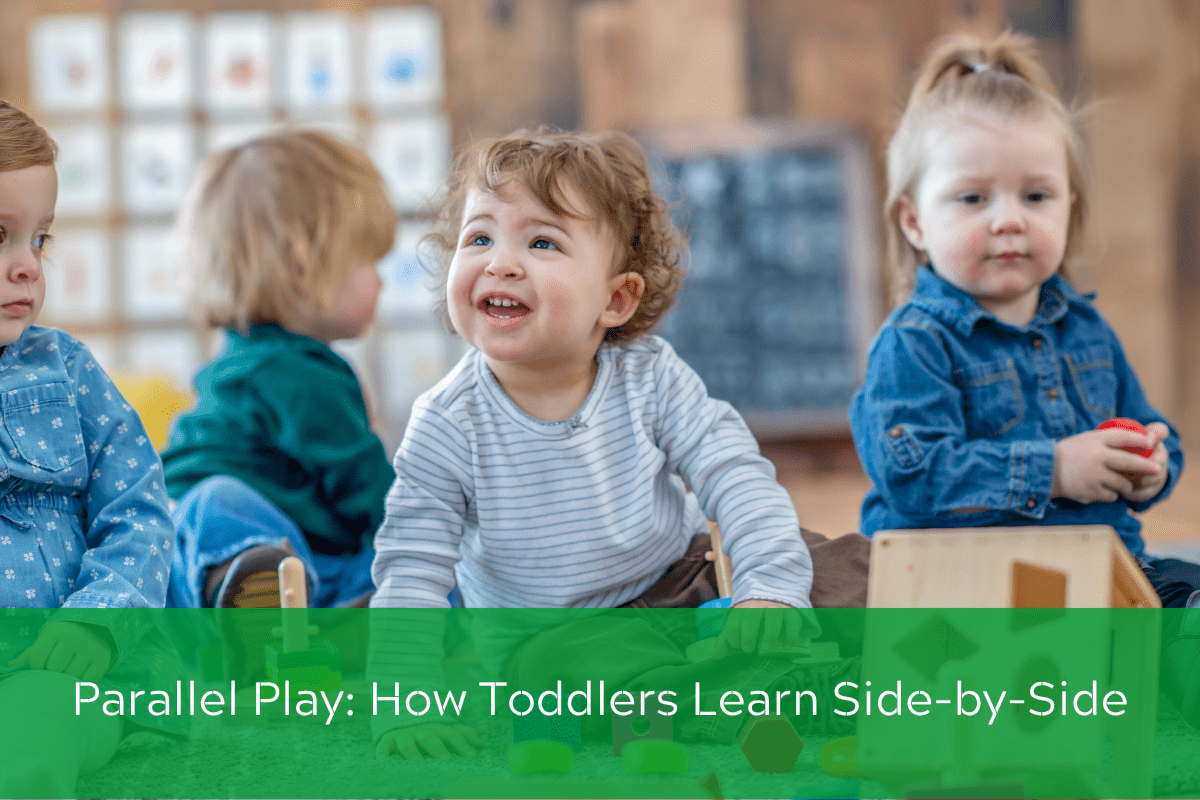
As toddlers grow and begin exploring the world around them, their play starts to shift from purely independent activities to something a little more social. One of the most common and important stages during this time is parallel play, when children play next to each other but not necessarily with each other.
This stage typically appears between two and three years old and represents an important step in early childhood development.
What Is Parallel Play?
Parallel play happens when children play side-by-side with similar toys or activities while each child remains focused on their own experience. They may not directly interact, but they’re aware of each other and often imitate what the other child is doing.
For example, two toddlers might sit next to each other building towers with blocks. One child may watch the other stack blocks and then try something similar, but they’re not yet collaborating or sharing a single project.
Why Parallel Play Matters
Parallel play helps toddlers begin developing social awareness without the pressure of full interaction. Children are observing others, learning new skills, and becoming more comfortable being around peers.
- Social development: Children begin recognizing that other kids exist as play partners, even if they’re not interacting directly yet.
- Observation and imitation: Toddlers learn by watching and often copy behaviors, helping them pick up new skills and ideas.
- Confidence in social environments: Playing near others allows children to become comfortable in group settings before actively participating.
- Language exposure: Even if they’re not talking directly to one another, children hear conversations and begin learning how communication works during play.
What Parallel Play Looks Like
Parallel play often appears in everyday activities where children are near one another but still focused on their own experiences. You might see two children digging in the same sandbox while building separate piles or toddlers drawing at the same table with crayons. Other examples include kids pushing toy trucks along the floor side-by-side or children climbing and exploring different parts of the same play structure.
In these situations, children may glance at each other, copy movements, or occasionally exchange a toy, but the main focus remains on their own individual play experience. Even without direct collaboration, they are still learning from one another through observation and shared space.
How Adults Can Support Parallel Play
Parents, caregivers, and educators can encourage healthy parallel play by creating environments where children feel comfortable playing near one another. Providing duplicate toys or materials helps reduce conflict and allows multiple children to engage in similar activities at the same time. Open-ended play opportunities like blocks, sand, sensory tables, and imaginative play materials also support exploration at each child’s own pace.
It is equally important to allow children time to observe before participating. Not every child is ready to jump into social interaction immediately, and observation is a valuable part of the learning process. Creating safe, shared play spaces where children can move freely while remaining close to peers naturally encourages this stage of development.
A Bridge to Social Play
Parallel play acts as an important bridge between independent play and more collaborative interactions. As children grow and become more comfortable with peers, their play gradually becomes more interactive.
Over time, toddlers who once played quietly next to each other will begin talking, sharing toys, and interacting more directly. These early side-by-side experiences help build the confidence and social understanding children need for the next stage of development.
What may look like simple play is actually laying the groundwork for communication, cooperation, and friendships in the years ahead.